


Injectable Peptides for Skin Tightening
How GHK-Cu and NAD+ firm and restore your skin from the cellular level up
What the research actually says, how each peptide works, and why your skin’s tightening mechanism needs more than a topical cream to function at full capacity
Skin tightening depends on a network of structural proteins, primarily collagen and elastin, that are built, maintained, and repaired by cellular processes requiring very specific molecular signals. When those signals weaken with age, no amount of moisturizer can compensate. The machinery that builds firm skin is still there. It just needs the right instructions to get back to work.
That is where injectable peptides enter the picture. And two of the most compelling options available today, GHK-Cu and NAD+, are rewriting the conversation about what non-surgical skin tightening can actually accomplish.
At Ageless Affairs, our peptide therapy programs in Tinton Falls use both of these peptides as part of medically supervised protocols designed to restore what aging takes away.

The collagen problem nobody talks about enough
Most conversations about skin tightening jump straight to treatments. Radiofrequency. Ultrasound. Threads. Those are all valid tools. But before choosing any of them, it helps to understand the underlying problem they are trying to solve.
Collagen makes up roughly 75% of the skin’s dry weight. It provides the structural scaffolding that keeps skin firm and lifted. Elastin, its partner protein, provides the bounce-back quality that lets skin return to its original shape after stretching. Together, they are the architecture of tight skin.
After age 25, collagen production declines by approximately 1% to 1.5% per year. By your forties, you have lost a meaningful percentage of the collagen your skin had at its peak. Elastin degrades even more stubbornly, because the body produces very little new elastin after puberty.
But here is the part most people miss: the cells responsible for producing collagen, called fibroblasts, do not disappear. They are still sitting in your dermis, capable of doing their job. What declines is the signaling environment that tells them to work. Peptides like GHK-Cu and the cellular fuel provided by NAD+ are two distinct but complementary ways to reactivate those fibroblasts and get them producing collagen and elastin at a level closer to what they managed a decade or two ago.
GHK-Cu: the copper peptide that outperformed retinol and vitamin C
GHK-Cu (glycyl-L-histidyl-L-lysine copper) is a naturally occurring tripeptide found in human plasma, saliva, and urine. It was first identified in the early 1970s by Dr. Loren Pickart, who noticed that liver tissue from younger donors promoted fibroblast activity far more effectively than tissue from older donors. The difference? Higher concentrations of GHK-Cu.
The peptide consists of just three amino acids, glycine, histidine, and lysine, bound to a copper ion. That copper component is essential. Copper is a cofactor in the enzymes responsible for cross-linking collagen and elastin fibers, which is the process that gives these proteins their tensile strength. Without adequate copper delivery, collagen can be synthesized but not properly assembled into the dense, organized matrix that firm skin requires.
What the clinical data shows
GHK-Cu is one of the more extensively studied peptides in dermatology. In a controlled trial comparing topical GHK-Cu to vitamin C and retinoic acid, the copper peptide produced collagen increases in 70% of subjects, compared to 50% for vitamin C and 40% for retinoic acid. A separate clinical study of 71 women with mild to advanced photoaging found that a GHK-Cu facial cream improved skin laxity, clarity, density, and thickness while reducing fine lines and wrinkle depth after 12 weeks of use.
At the gene expression level, GHK-Cu’s reach is even broader. Research has identified that the peptide modulates the activity of over 4,000 human genes, with a significant portion involved in tissue remodeling, antioxidant defense, and anti-inflammatory pathways. It upregulates genes responsible for collagen synthesis (types I, III, and IV), increases production of decorin (a proteoglycan that regulates collagen fiber assembly), and stimulates glycosaminoglycan synthesis, which supports skin hydration and volume from within the dermal matrix.
Why injectable GHK-Cu works differently than topical
Topical copper peptide serums have real merit, but they face a fundamental delivery challenge. GHK-Cu is susceptible to degradation by proteolytic enzymes in the skin, and its ability to penetrate the stratum corneum in therapeutic concentrations is limited. When GHK-Cu is delivered via subcutaneous injection or infused directly into the skin through microneedling, the peptide bypasses that barrier entirely, reaching fibroblasts at concentrations that topical application simply cannot match.
The difference matters clinically. Injectable delivery means faster onset, more consistent tissue response, and the ability to target specific areas of laxity rather than relying on diffusion through a surface that was literally designed to keep things out.

NAD+: the cellular fuel your skin cannot tighten without
If GHK-Cu is the architect directing collagen construction, NAD+ (nicotinamide adenine dinucleotide) is the power grid supplying electricity to the entire building site.
NAD+ is a coenzyme found in every cell of the body. It is essential for mitochondrial energy production, DNA repair, and the activation of sirtuins, a family of proteins that regulate aging, inflammation, and cellular stress responses. NAD+ is not a peptide in the traditional amino-acid-chain sense, but it is increasingly integrated into peptide therapy protocols because of how powerfully it supports the cellular environment in which peptides do their work.
What happens when NAD+ declines
NAD+ levels drop significantly with age. By the time you reach 50, your NAD+ levels may be roughly half of what they were at 20. That decline has cascading consequences for the skin.
Fibroblasts need mitochondrial energy (ATP) to synthesize collagen. When NAD+ is low, mitochondrial function suffers, and fibroblasts produce less collagen even when they receive the right peptide signals. DNA repair mechanisms also slow down, allowing UV-damaged and senescent cells to accumulate in the dermis. Those senescent cells do not just sit quietly. They secrete inflammatory compounds that actively break down surrounding collagen and elastin, a process researchers call the senescence-associated secretory phenotype.
Declining NAD+ also impairs autophagy, the cellular housekeeping process that clears out damaged proteins and organelles. When autophagy slows, glycated collagen (stiff, non-functional collagen damaged by sugar molecules) accumulates in the dermis, contributing to the loss of skin flexibility and suppleness that defines aging skin.
How NAD+ restoration supports skin tightening
Restoring NAD+ levels addresses the energy deficit that makes aging skin unresponsive to repair signals. Research published in Plastic and Reconstructive Surgery noted that adequate NAD+ levels are critical for sirtuin-mediated activation of collagen-related genes and autophagy pathways. SIRT1 and SIRT6, two NAD+-dependent sirtuins, are directly linked to collagen preservation in the dermis and keratinocyte proliferation in the epidermis.
In practical terms, NAD+ restoration means that the fibroblasts being stimulated by peptides like GHK-Cu have the energy and functional capacity to actually follow through on those signals. It is the difference between giving someone building blueprints and giving them blueprints plus a construction crew that has actually slept and eaten.
NAD+ is can be delivered through IV therapy, subcutaneous injections.
oral precursors such as (NMN and nicotinamide riboside)can also used And may help to support levels.
Why GHK-Cu and NAD+ work better together than alone
The logic is straightforward once you understand what each one does. GHK-Cu tells fibroblasts to build collagen. NAD+ ensures those fibroblasts have the mitochondrial energy, DNA repair capacity, and sirtuin activity to actually do it.
Think of it this way: a peptide signal without cellular energy is like pressing the gas pedal in a car with no fuel. You might get a brief response, but the engine will not sustain the effort.
Combining GHK-Cu’s targeted tissue-remodeling signals with NAD+’s broad cellular restoration creates conditions where skin tightening compounds over time rather than plateauing after a few weeks.
This combination approach also aligns with a growing body of research in regenerative dermatology suggesting that the efficacy of many aesthetic treatments, from radiofrequency skin tightening to Morpheus8, ultimately depends on the underlying cells being in an optimal condition to respond. Ensuring your NAD+ levels and peptide signaling are intact before or alongside these procedures may improve both the quality and longevity of results.
How GHK-Cu and NAD+ compare
GHK-Cu | NAD+ | |
What it is | Copper-binding tripeptide (glycine, histidine, lysine + copper) | Coenzyme essential for cellular energy, DNA repair, and sirtuin activation |
Primary skin benefit | Directly stimulates collagen and elastin synthesis; tightens and firms | Restores cellular energy so skin cells can repair, regenerate, and produce collagen efficiently |
How it works | Delivers copper to fibroblasts; modulates gene expression for tissue remodeling | Fuels mitochondria; activates sirtuins (SIRT1, SIRT6) that regulate collagen genes and autophagy |
Clinical evidence | Outperformed vitamin C and retinoic acid for collagen production in 70% of subjects | NAD+ precursors improved skin elasticity and reduced sallowness in double-blind trials |
Delivery methods | Topical serums, subcutaneous injection, microneedling infusion | IV infusion, subcutaneous injection, oral supplementation (NMN/NR) |
Timeline to visible results | Skin texture and tone: 4–8 weeks. Firmness and tightening: 8–12 weeks. | Energy and glow: 1–2 weeks. Skin quality and resilience: 4–12 weeks. |
Best for | Fine lines, skin laxity, post-procedure healing, scar repair, thinning skin | Dull or fatigued skin, age-related loss of resilience, pre-treatment optimization, overall longevity |
Who benefits most from injectable peptides for skin tightening
These are not treatments exclusively for people who have visible sagging. Some of the most dramatic responses come from patients who catch the process early and intervene before significant structural loss has occurred.
Adults in their late 30s to 50s noticing early laxity. The jawline is slightly less defined than it was five years ago. The skin around the eyes feels thinner. You look tired even when you are not. This is the window where peptide therapy and NAD+ restoration can make the most meaningful difference, because the cellular machinery is still largely intact and responds well to reactivation.
Patients preparing for or recovering from aesthetic procedures. If you are planning radiofrequency microneedling, laser resurfacing, or any procedure that relies on your skin’s collagen-building response, optimizing your NAD+ and peptide levels beforehand can improve outcomes. It is the biological equivalent of prepping a surface before painting.
People with sun-damaged or environmentally stressed skin. UV exposure accelerates NAD+ depletion, collagen degradation, and the accumulation of senescent cells. GHK-Cu’s antioxidant and anti-inflammatory gene modulation, combined with NAD+’s DNA repair support, directly addresses the cellular damage that sun-exposed skin carries.
Anyone experiencing the frustration of doing everything right and still losing firmness. You exercise. You eat well. You have a solid skincare routine. But the hormonal and molecular changes that come with aging are not something willpower can override. Peptide therapy works at the level where those changes actually occur.
What a realistic treatment timeline looks like
Weeks 1–3: Improved skin hydration, a subtle glow, and better energy levels (especially with NAD+). Sleep quality often improves early, which has its own downstream benefits for skin repair. Weeks 4–8: Noticeable improvements in skin texture and tone. Fine lines begin to soften. The skin feels denser to the touch. Patients who combine GHK-Cu with microneedling often see accelerated results in this window. Months 3–6: Visible tightening and improved skin elasticity. The jawline looks more defined. Under-eye hollowing appears less pronounced. Body skin (neck, decolletage, upper arms) responds to the cumulative collagen rebuilding. Beyond 6 months: Ongoing maintenance supports sustained results. Many patients transition to a reduced-frequency protocol that preserves gains while continuing to build on them. |

Frequently asked questions
Is GHK-Cu safe?
GHK-Cu has a well-documented safety profile spanning decades of research. It is naturally occurring in human plasma and has been described in published literature as safe, well-tolerated, and active at very low concentrations. Side effects from injectable use are generally limited to mild redness or sensitivity at the injection site.
Is NAD+ therapy the same as taking niacinamide supplements?
Not exactly. Niacinamide (vitamin B3) is a precursor to NAD+, and topical niacinamide has proven skin benefits. However, NAD+ therapy delivers the coenzyme directly into the bloodstream at concentrations that oral or topical precursors cannot achieve, resulting in more rapid and pronounced cellular effects.
Can I use GHK-Cu and NAD+ alongside other skin tightening treatments?
Yes, and many clinicians recommend it. Research suggests that procedures like radiofrequency, microneedling, and laser treatments rely on the skin’s collagen-building response for their results. Optimizing NAD+ levels and peptide signaling can enhance the effectiveness and recovery from those procedures.
How are these peptides administered?
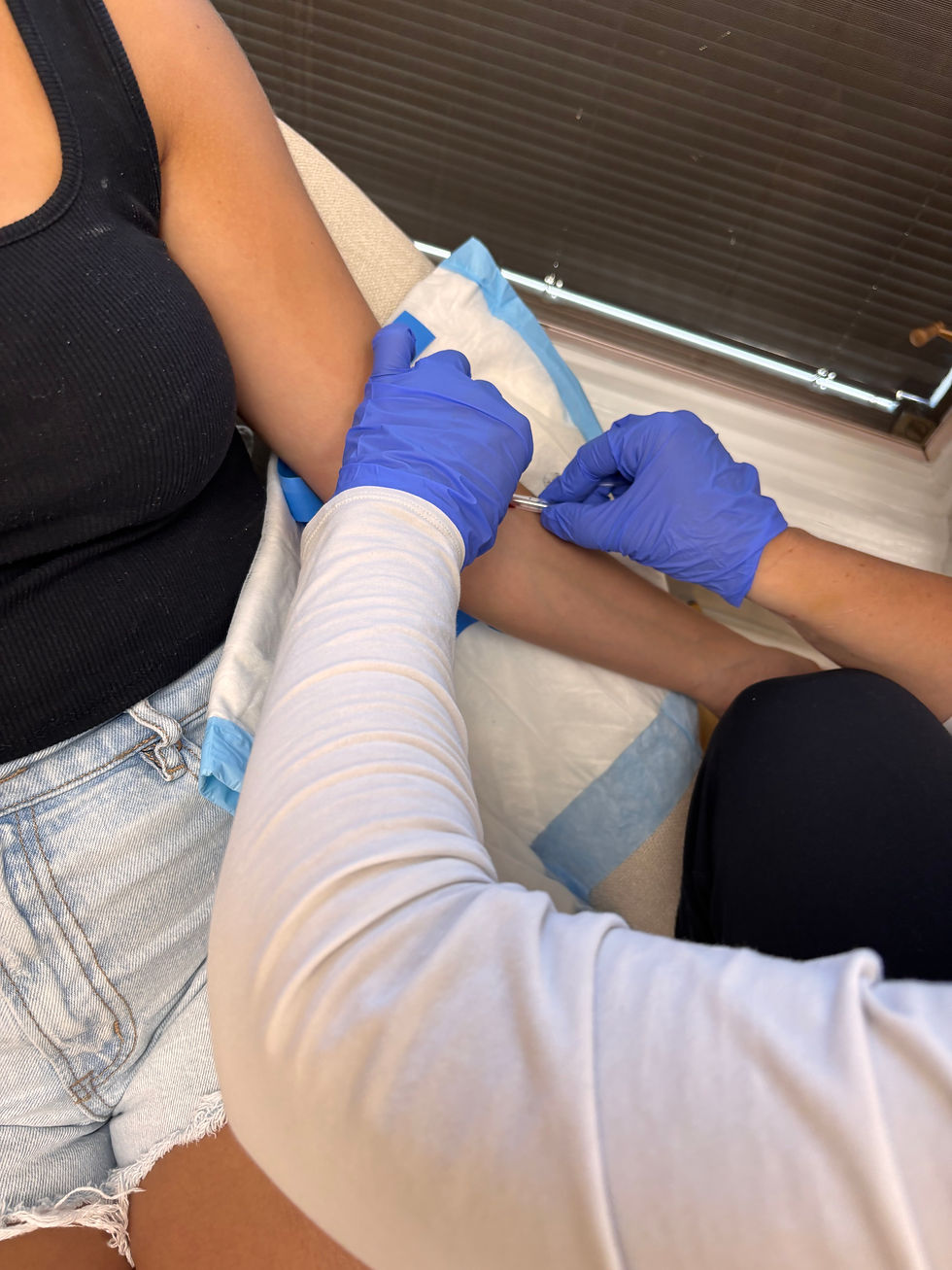
GHK-Cu is most commonly delivered via subcutaneous injection or infused into the skin through microneedling sessions. NAD+ is typically administered as an IV infusion or subcutaneous injection.
How long do results last?
Results build cumulatively with consistent therapy. Collagen remodeling is a gradual biological process, so the improvements from a three-to-six-month protocol tend to persist for a period after treatment ends. Maintenance sessions at reduced frequency help sustain and extend results over the long term.
Do peptides replace the need for skincare?
No. Peptide therapy works from the inside out, while a good skincare regimen (sunscreen, antioxidants, hydration) works from the outside in. They are complementary strategies. The patients who see the best results are those who approach skin health from both directions.
Your skin still knows how to tighten. It just needs the signal.
The science behind injectable peptides for skin tightening is not speculative. It is grounded in decades of clinical research, gene expression data, and a growing body of evidence that cellular restoration is the future of aesthetic medicine.
GHK-Cu rebuilds the structural proteins your skin depends on. NAD+ ensures your cells have the energy and repair capacity to follow through. Together, they create conditions for skin tightening that work with your biology rather than against it.


Comments