


The Hair Loss Solution Nobody Talks About: How PRP and PRF Are Giving Women (and Men) Their Confidence Back
Most people expect some hair loss with age, and most picture a man with a receding hairline when they think about it. Far fewer picture the woman who notices her part getting wider in the bathroom mirror, or who starts wearing her hair up because her ponytail feels thinner in her hand. Female hair loss is common and deeply personal, and it tends to stay private long after it starts.
Platelet-rich plasma (PRP) and platelet-rich fibrin (PRF) have become two of the most requested non-surgical options for this kind of thinning. Both are prepared from a small sample of the patient’s own blood, and both deliver concentrated repair signals to follicles that are still alive but struggling. This article explains how each one works and what a realistic course of treatment looks like at Ageless Affairs in Tinton Falls, New Jersey.
Key takeaways Hair loss in women usually appears as diffuse thinning along the part and crown, and it often goes unaddressed for years. PRP and PRF both come from your own blood and deliver growth factors to weakened follicles. PRF releases them more slowly through a natural fibrin matrix. Results build gradually, and most patients see visible change in density around three to four months into a treatment series. Platelet therapy works best on thinning hair with living follicles, so earlier treatment generally leads to better outcomes. |
Why Does Hair Loss Feel So Hard to Talk About?
Hair carries a great deal of identity. For many women it is tied to self-image in ways that make thinning feel like a private failing, even when it has a clear medical cause. Men face a different kind of pressure. Baldness is so expected in men that many feel they have no right to be bothered by it, and they wait until the loss is advanced before asking for help.
Both groups tend to lose valuable time. Patients often spend a year or more on shampoos and supplements bought online before they see a medical provider. The delay matters, because follicles that have been shrinking for years become harder to revive. That alone is a good reason to start the conversation sooner than most people do.
What Causes Thinning Hair in Women and Men?
Hair loss, known clinically as alopecia, is any condition in which hair falls out or fails to regrow at a normal rate. Each follicle cycles through a long growth phase and a shorter resting phase, after which the old hair sheds and a new one begins. Thinning develops when that cycle is disrupted, either because more follicles than usual rest at the same time or because the follicles themselves gradually shrink.
What Is Androgenetic Alopecia?
Androgenetic alopecia is the most common form of hair loss in both sexes. It is a hereditary condition in which follicles become sensitive to dihydrotestosterone (DHT), a hormone derived from testosterone. Over time, DHT causes affected follicles to miniaturize, so each new hair grows in finer and shorter than the one before it until some follicles stop producing visible hair at all.
The pattern looks different in men and women. Men typically lose hair at the temples and crown, a progression dermatologists grade on the Norwood scale. Women usually keep their frontal hairline and develop diffuse thinning across the top of the scalp instead, most visible as a widening part. Female pattern hair loss is graded on the Ludwig scale and often speeds up around menopause, when falling estrogen leaves follicles more exposed to the effects of androgens.
Can Hormones, Stress, or Weight Loss Trigger Shedding?
Telogen effluvium is a temporary form of hair loss in which a large share of follicles shift into the resting phase at once, usually two to three months after a physical or emotional shock. Childbirth, surgery, a high fever and severe stress are all well-documented triggers. Rapid weight loss belongs on that list too, which is why some patients notice heavier shedding several months into a GLP-1 medication. Patients in our medical weight loss program in Tinton Falls are encouraged to mention any shedding at follow-up visits, and our article on body contouring after GLP-1 weight loss covers the other ways fast weight loss changes the body.
Telogen effluvium often settles on its own once the trigger passes, although it can unmask pattern hair loss in people who are genetically prone to it. Low iron stores and thyroid disorders can also drive shedding, so a proper evaluation may include blood work before any treatment begins. Women moving through perimenopause frequently notice thinning alongside other changes, a stage of life we discuss in our piece on NAD+ therapy and hormonal balance during menopause.
What Are PRP and PRF?
Platelet-rich plasma and platelet-rich fibrin are autologous blood concentrates, meaning they are prepared from the patient’s own blood. Platelets are best known for their role in clotting, and they also store proteins called growth factors that direct tissue repair. Concentrating those platelets and placing them in the scalp delivers the same repair signals directly to the follicles.
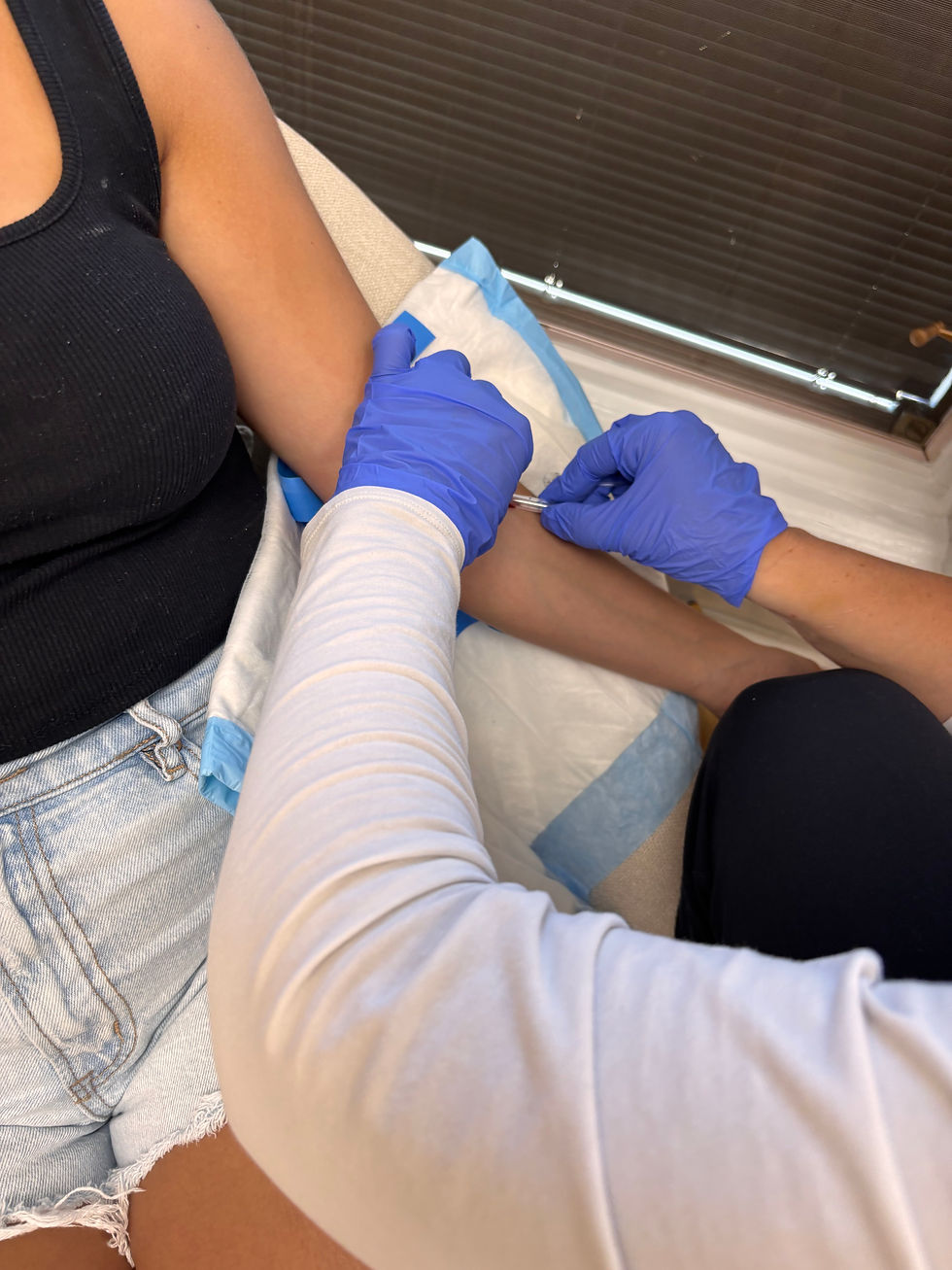
Both treatments begin with a standard blood draw, much like a routine lab test. The sample is then spun in a centrifuge, which separates its components by weight. The way it is spun is where the two methods part ways.
How Does PRP Work on the Scalp?
PRP is produced by spinning blood mixed with an anticoagulant at a relatively high speed. The result is a liquid plasma layer that holds several times the normal concentration of platelets. Once injected into the scalp, those platelets release growth factors such as platelet-derived growth factor and vascular endothelial growth factor. Researchers believe these signals extend the growth phase of the hair cycle and improve blood supply around the follicle, helping miniaturized follicles produce thicker hair again.
PRP has a long history in orthopedics and oral surgery, and dermatologists began applying it to hair loss in the 2000s. It is the more extensively studied of the two treatments, and most published trials on platelet therapy for hair use PRP.
What Makes PRF Different?
PRF is prepared without an anticoagulant and spun at a lower speed for a shorter time. That gentler process keeps more white blood cells in the sample along with fibrinogen, which forms a soft fibrin network once PRF is placed in the tissue. The network acts as a scaffold that holds platelets in place, so growth factors are released gradually over several days. PRP, by comparison, releases most of its growth factors soon after injection.
PRF was first developed in France in the early 2000s for oral and maxillofacial surgery, and its injectable form has since moved into aesthetic medicine. At Ageless Affairs, PRF is the platelet concentrate used most often, both for the scalp and for facial treatments such as PRP, PRF and EZ Gel in Tinton Falls.
How Do PRP and PRF Compare Side by Side?
The table below summarizes the practical differences patients ask about most often.
Feature | PRP (platelet-rich plasma) | PRF (platelet-rich fibrin) |
Preparation | Higher-speed spin with an anticoagulant added | Lower-speed spin with no anticoagulant |
Consistency | Thin liquid plasma | Liquid that forms a soft fibrin matrix in the tissue |
Growth factor release | Concentrated burst soon after injection | Slower, sustained release over several days |
White blood cells | Mostly removed during processing | Largely retained |
Research on hair loss | Larger body of trials and meta-analyses | Smaller but growing body of studies |
Role at Ageless Affairs | Discussed case by case | Preferred platelet option in hair restoration plans |
What Does the Research Say About Platelet Therapy for Hair?
The evidence for platelet therapy in hair loss has grown steadily over the past decade. Most of it focuses on androgenetic alopecia, and most trials measure hair density, the number of hairs in a fixed area of scalp, before and after a series of treatments.
Backed by research A meta-analysis published in the Journal of Personalized Medicine pooled 17 trial groups and found that average hair density rose from about 142 to about 178 hairs per square centimeter after PRP treatment. The same analysis found that younger patients tended to respond more strongly, which supports starting treatment early instead of waiting for the loss to advance. |
Research on PRF is less extensive, although early findings are encouraging. A prospective study in Dermatologic Surgery that used an injectable leukocyte- and platelet-rich fibrin reported clinical improvement in patients with androgenetic alopecia, and a systematic review focused on women found that platelet-based treatment improved terminal hair density compared with control treatments. In the United States, PRP and PRF are considered off-label uses for hair loss. The FDA has cleared the devices used to prepare them, but it has not approved them specifically for hair regrowth.
Who Is a Good Candidate for PRP or PRF Hair Treatment?
Platelet therapy works by strengthening follicles that are still present, so it suits people whose hair is thinning more than people whose scalp is already smooth. The patients who tend to respond best share two features:
Early to moderate thinning, such as a widening part in women or a receding hairline and thinning crown in men, where miniaturized follicles can still be stimulated
Good general health with no bleeding disorder or active scalp infection, combined with realistic expectations about gradual change
Some forms of hair loss call for a different approach. Scarring alopecias destroy the follicle permanently and need diagnosis and management by a dermatologist. Patients with advanced baldness across large areas may get more from a hair transplant, although PRF can still support transplanted grafts and the surrounding native hair. Anyone who takes blood thinners or has a low platelet count should review their medical history in detail with the provider before treatment.
What Happens During a Treatment Session?
A session begins with a small blood draw, and the sample is processed in the centrifuge while the scalp is cleansed and prepared. Numbing is used to keep the experience comfortable, and most patients describe the sensation as pressure with brief stinging at the injection points.
The platelet concentrate is then delivered into the thinning areas, either through a series of fine injections or with microneedling, which creates tiny channels in the scalp so the solution can penetrate. Many plans combine both methods. The same principle underpins microneedling with PRP in Tinton Falls for facial skin.
Patients should arrive with a clean scalp and no styling products. Afterward, it is best to avoid washing or applying anything to the scalp for 12 to 24 hours. Mild tenderness and some redness are common for a day or so and fade without any special care.
How Long Does It Take to See Results?
Hair grows slowly, so the results of PRP and PRF build slowly as well. Many patients first notice that they are shedding less. Early signs of new growth, often fine baby hairs along the part or hairline, can appear in as little as four weeks, while the most visible improvement in density usually shows between weeks 12 and 16. Results from a complete series continue to mature for several months after the final session.
Androgenetic alopecia is progressive, so maintenance is part of any long-term plan. Most patients return for touch-up sessions a few times a year to hold their gains, with the schedule adjusted to how their scalp responds.
A note on expectations PRP and PRF strengthen existing follicles and can improve hair density and thickness over time. They cannot regrow hair where follicles have been lost completely, and results vary with age and with how long the hair loss has been present. A consultation will tell you which category you fall into before you commit to a series. |
How Does Ageless Affairs Build a Hair Restoration Plan?
Every plan starts with a consultation and scalp photographs, which give patient and provider a clear baseline to measure against. Your provider reviews your health history and the pattern of your hair loss, and may recommend blood work if a hormonal or nutritional cause seems likely.
Our physician-led non-surgical hair restoration in Tinton Falls, NJ is built around five sessions spaced four to six weeks apart. Each session pairs PRF with growth factors or hair exosomes, delivered through scalp injections or microneedling depending on your needs. The program uses the AnteAGE MD hair system, a solution developed from bone marrow stem cell cultures, and includes a home kit for use between visits. Patients also receive a three-month supply of Nutrafol supplements and monthly progress evaluations with photo documentation.
Why Pair PRF With Exosomes and Growth Factors?
Exosomes are tiny vesicles that cells release to carry proteins and other signaling molecules to neighboring cells. In hair restoration they serve as an additional source of growth signals alongside the patient’s own platelets. The rationale for combining them is that follicles affected by androgenetic alopecia often show low-grade inflammation and reduced blood flow, and a broader set of regenerative signals may address more of that environment than a single source can.
How Does Platelet Therapy Compare With Other Hair Loss Treatments?
Topical minoxidil is the most widely used first-line treatment for pattern hair loss in both sexes, and oral finasteride is a common prescription option for men. Both are effective for many people, and both must be continued indefinitely to keep their results. Some patients stop because of side effects or simply because a daily routine is hard to sustain. Hair transplant surgery relocates follicles from the back of the scalp to thinning areas and can produce dramatic change, at the cost of a surgical procedure and a recovery period.
Platelet therapy occupies the middle ground. It requires a handful of visits per year in place of a daily habit, and it relies on the body’s own repair signals. Many providers now pair PRP or PRF with minoxidil, since the two work through different mechanisms and may complement each other. Your provider can help you decide whether platelet therapy should stand alone or work alongside another treatment.
Is PRP or PRF Hair Treatment Safe?
Because both treatments use the patient’s own blood, the risk of an allergic reaction is very low. The most common side effects are temporary tenderness and mild swelling at the treatment sites, and some patients feel a dull headache later that day. Infection is rare when the procedure is performed under sterile conditions by trained medical staff.
Patients are usually asked to avoid anti-inflammatory pain relievers such as ibuprofen for several days before and after treatment, since these medications can blunt platelet activity. Your provider will give you specific instructions based on your medications and health history.
Is PRP or PRF Worth It for Thinning Hair?
For many people, yes, particularly those who begin while their follicles still have room to recover. Platelet therapy offers a low-risk way to slow shedding and rebuild density using the body’s own repair signals, with a plan that is reviewed and adjusted as the hair responds. It works on a timeline measured in months and cannot reverse decades of loss, which is why the timing of the first visit matters so much.
Hair loss is common in women and men alike, and it deserves the same attention as any other health concern. The first step is an in-person assessment with a provider who can identify the cause and tell you plainly whether PRP or PRF is likely to help.
Noticing thinning at your part or hairline? The team at Ageless Affairs Med Spa in Tinton Falls, New Jersey can evaluate your scalp and build a PRF hair restoration plan around your goals. Book a consultation to get started. |
References
Effectiveness of Platelet-Rich Plasma Therapy in Androgenic Alopecia: A Meta-Analysis. Journal of Personalized Medicine, 2022. https://doi.org/10.3390/jpm12030342
Injectable Platelet-, Leukocyte-, and Fibrin-Rich Plasma (iL-PRF) in the Management of Androgenetic Alopecia. Dermatologic Surgery, 2018. https://doi.org/10.1097/DSS.0000000000001584
Use of Autologous Platelet-Rich Plasma in Androgenetic Alopecia in Women: A Systematic Review and Meta-Analysis. Journal of Dermatological Treatment, 2023. https://doi.org/10.1080/09546634.2022.2138692


Comments